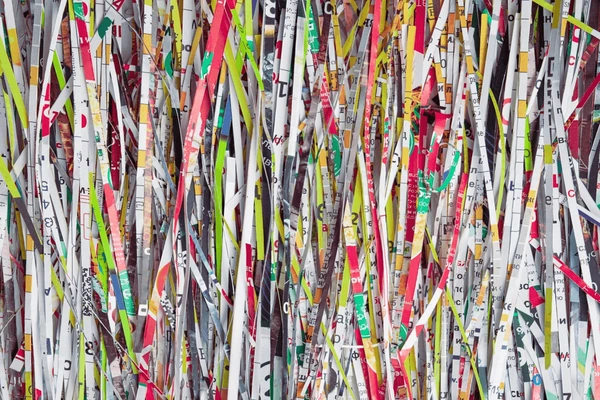
During a clear out of my studio I recycled 148 old watercolour paintings that had been lying around in a plan-chest for 20 years. Some radical action was required and I proceeded to shred each one using an old office shredder. This produced long strips of paper about 6mm wide, a memory of a past history.
Solving one problem created another as I became fascinated with the 1000’s of paper strips, and found I couldn’t throw them away. I set them aside for later inspiration, which came some years later.
In 2011, as part of my MA, I was trying to understand the meaning of landscape. One aspect of that research involved talking to other landscape artists, and interviewing them about their work to find out what landscape meant to them,. I recorded our conversations and took photographs of their work was in progress at the time. They were all incredibly helpful and generous with their time.
Once I had all the material I set about looking for a way to visualise these conversations. I remembered the shredded watercolours. It was important to me that I use both words and images, and the existence of 1000’s of watercolour strips, and photographs of work in progress, provided an answer.
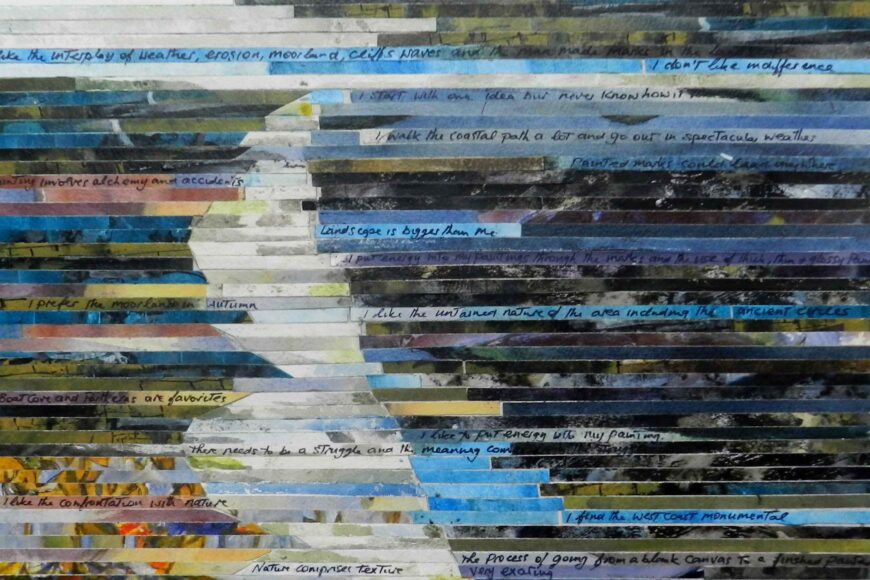
I glued the watercolour strips onto marine ply in parallel lines, using the structure of each artist’s work in progress that I had photographed as a starting point.
The result was 7 abstracted paintings which represented both, my past, our joint conversations and the artist’s work. I wrote down some of the key ideas, from these conversation, on the paintings. The artists all spoke in confidence and are not identified.
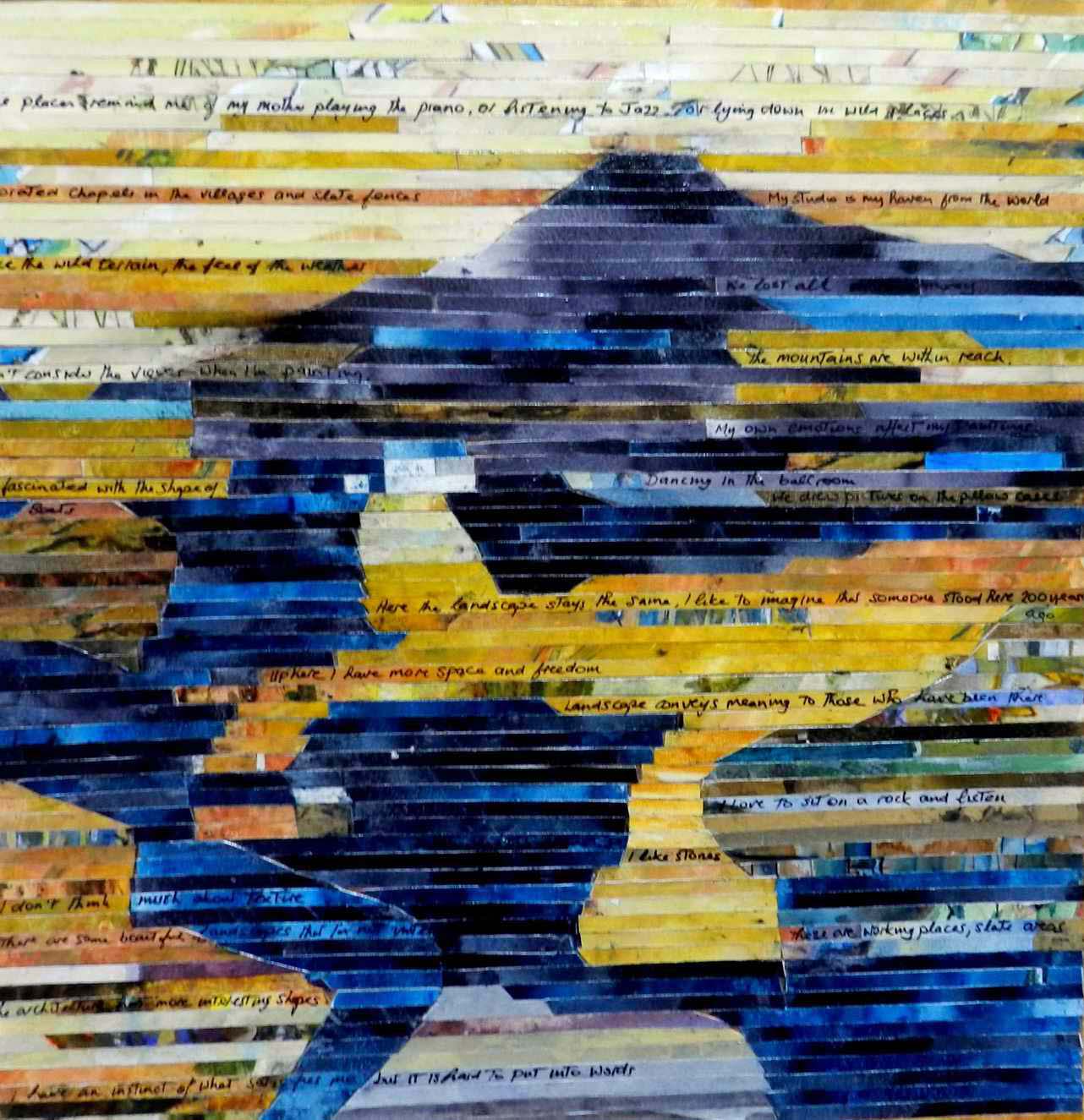
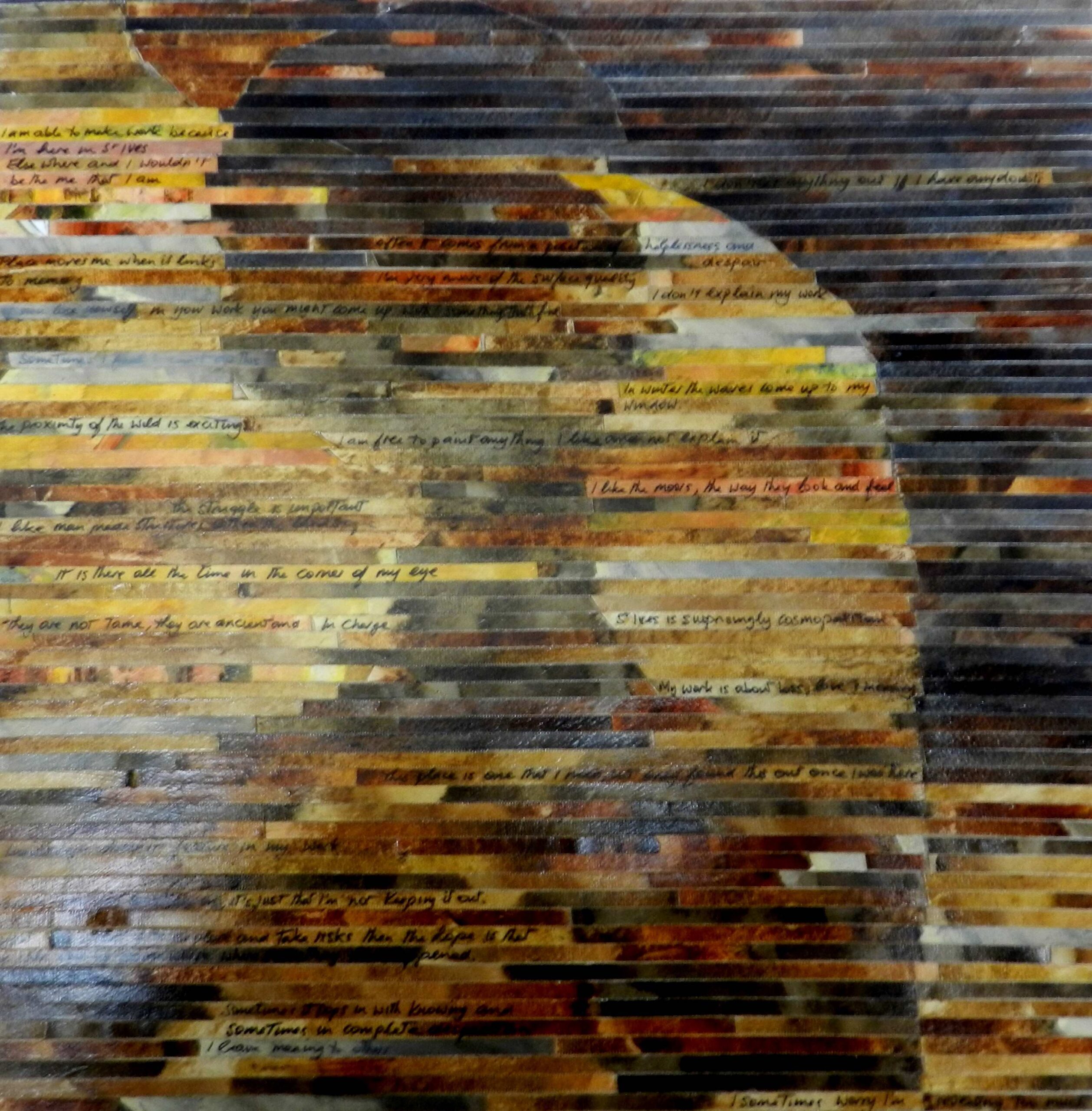
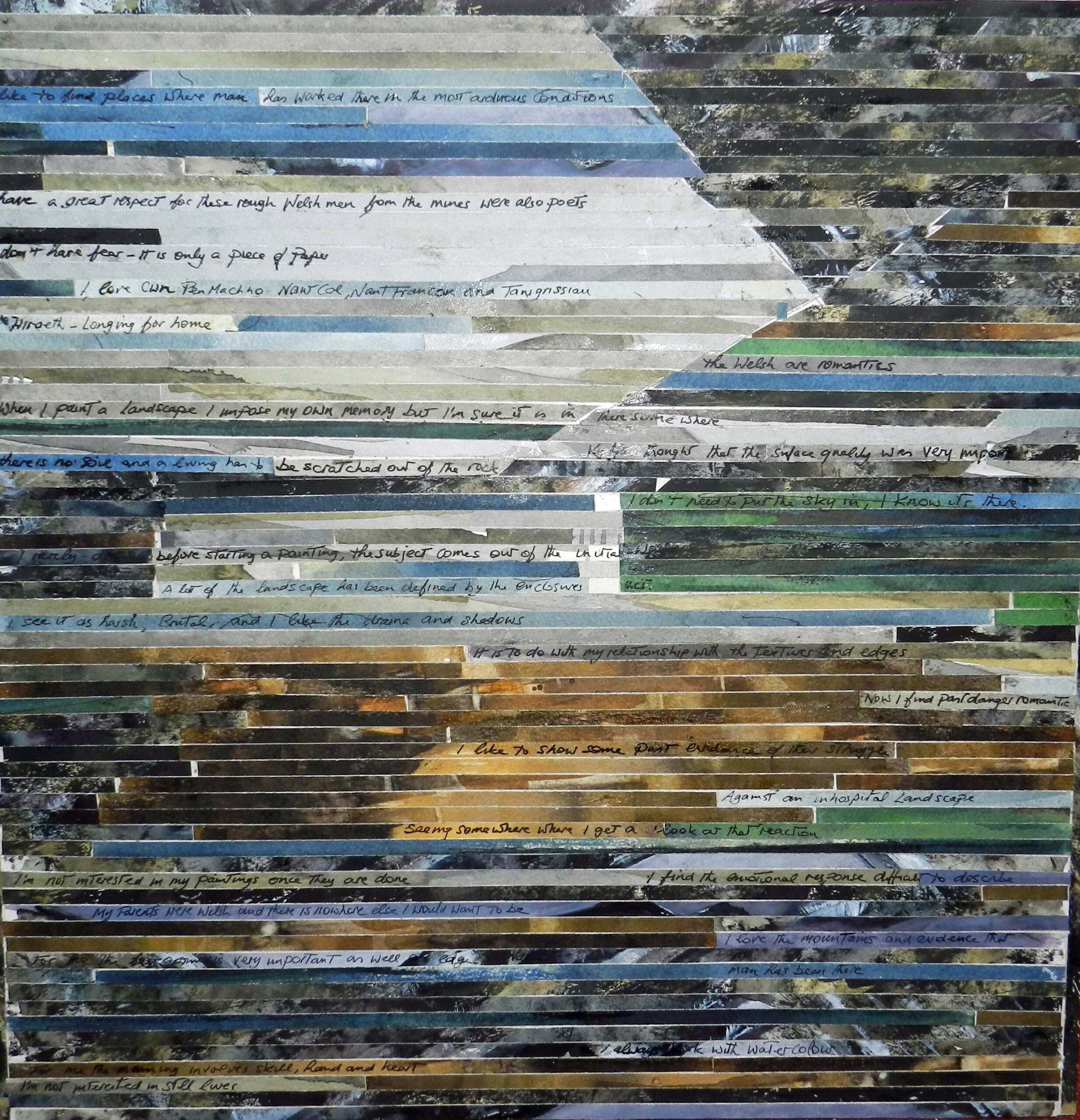
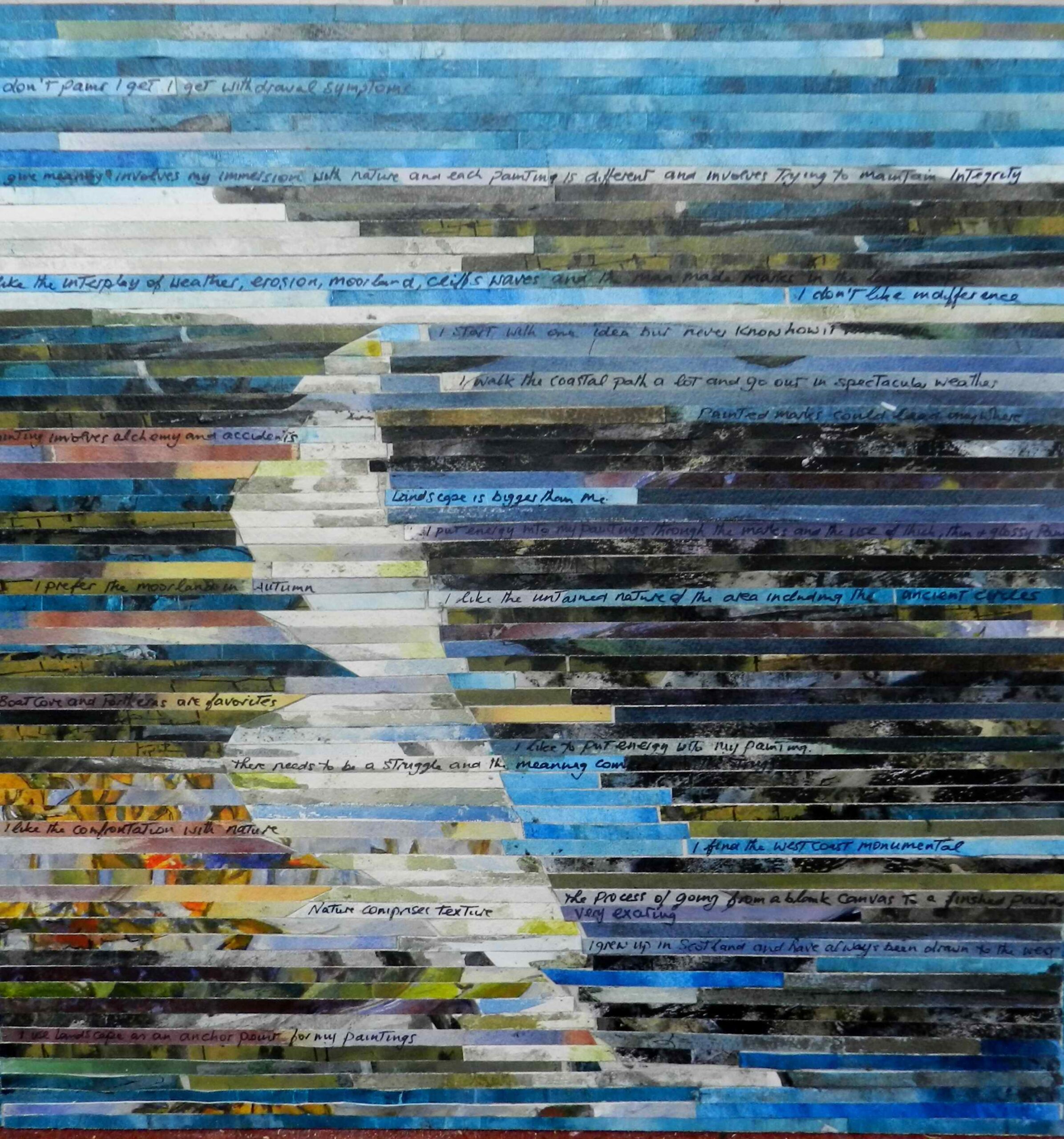
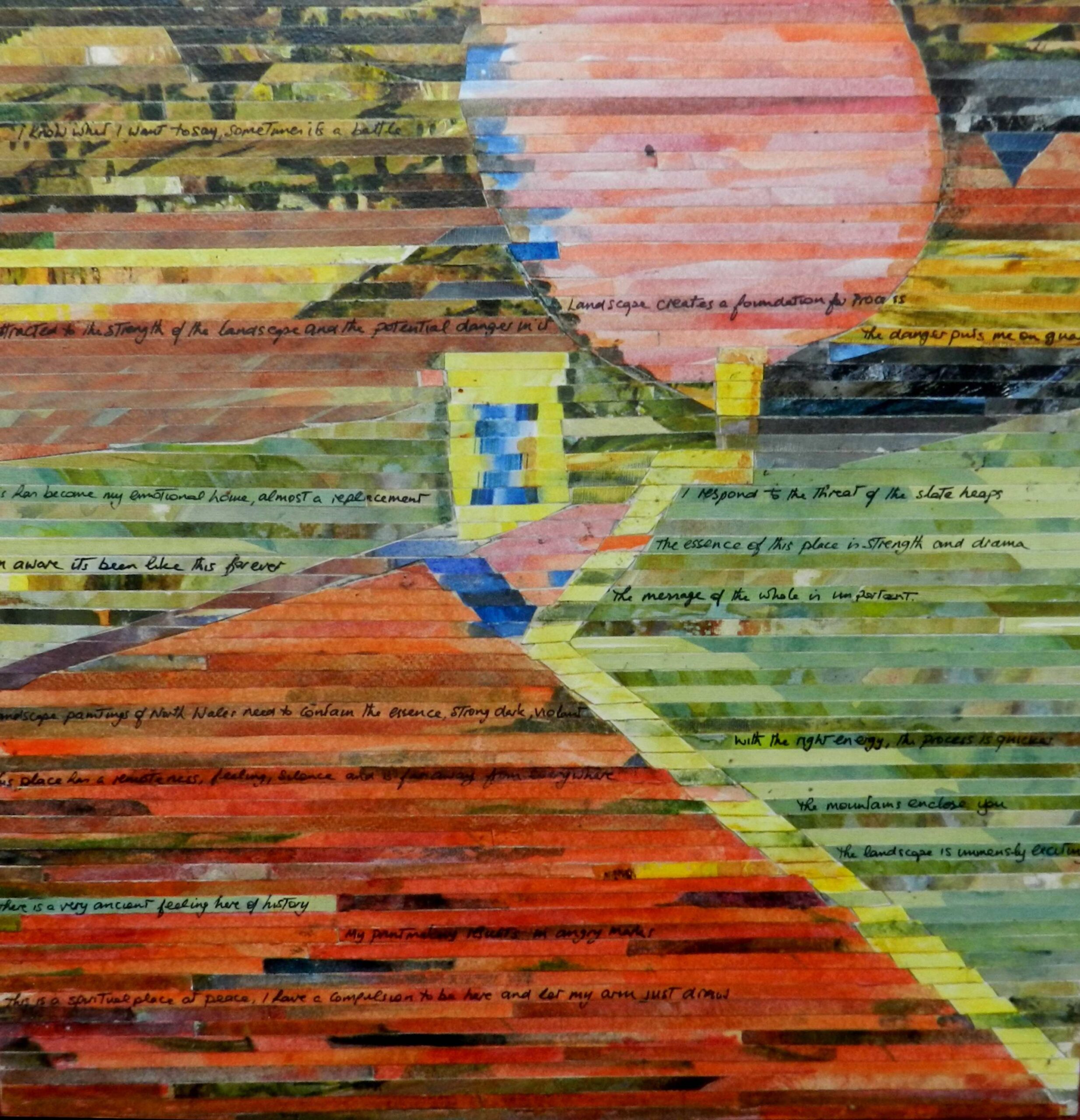
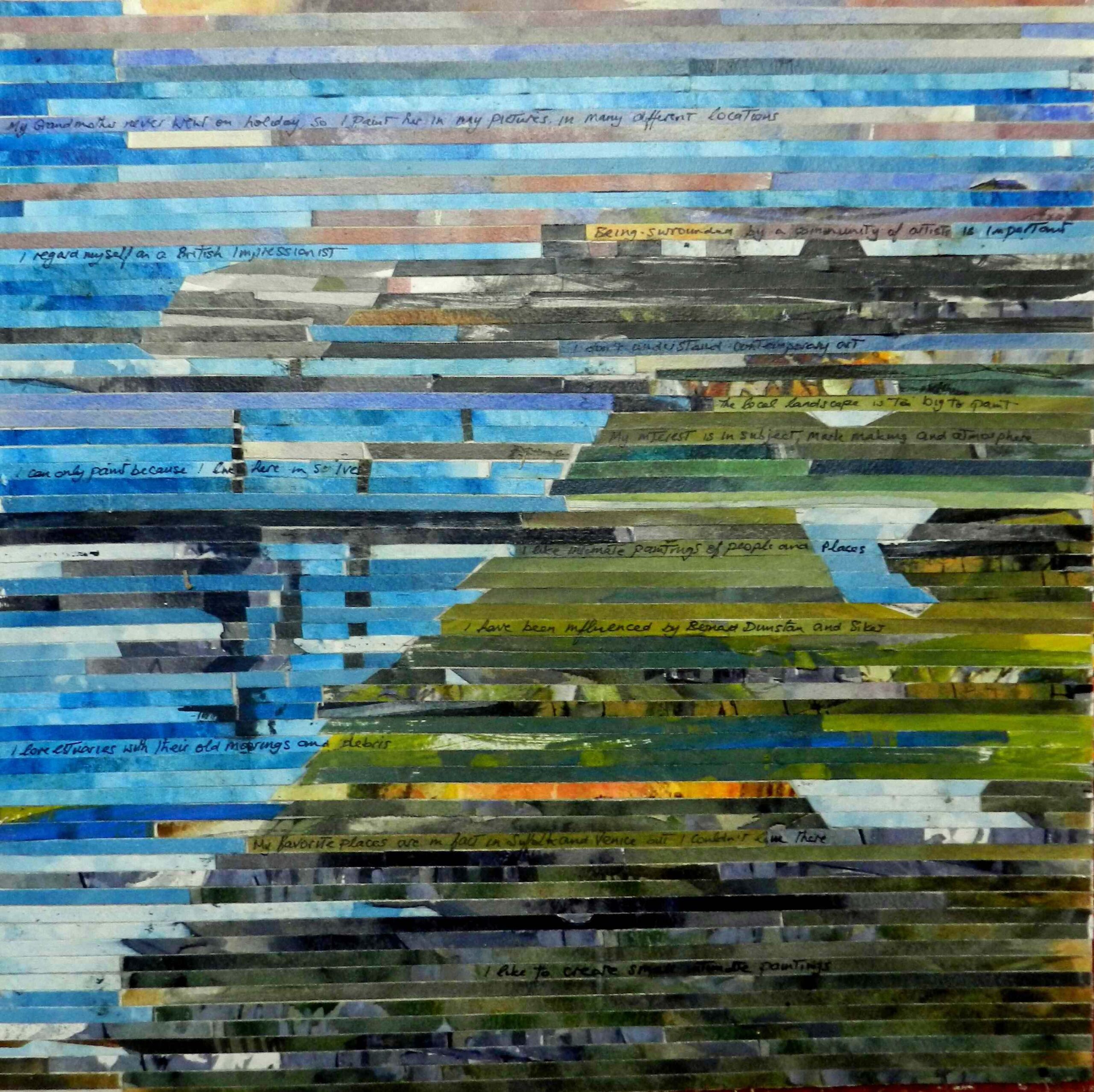
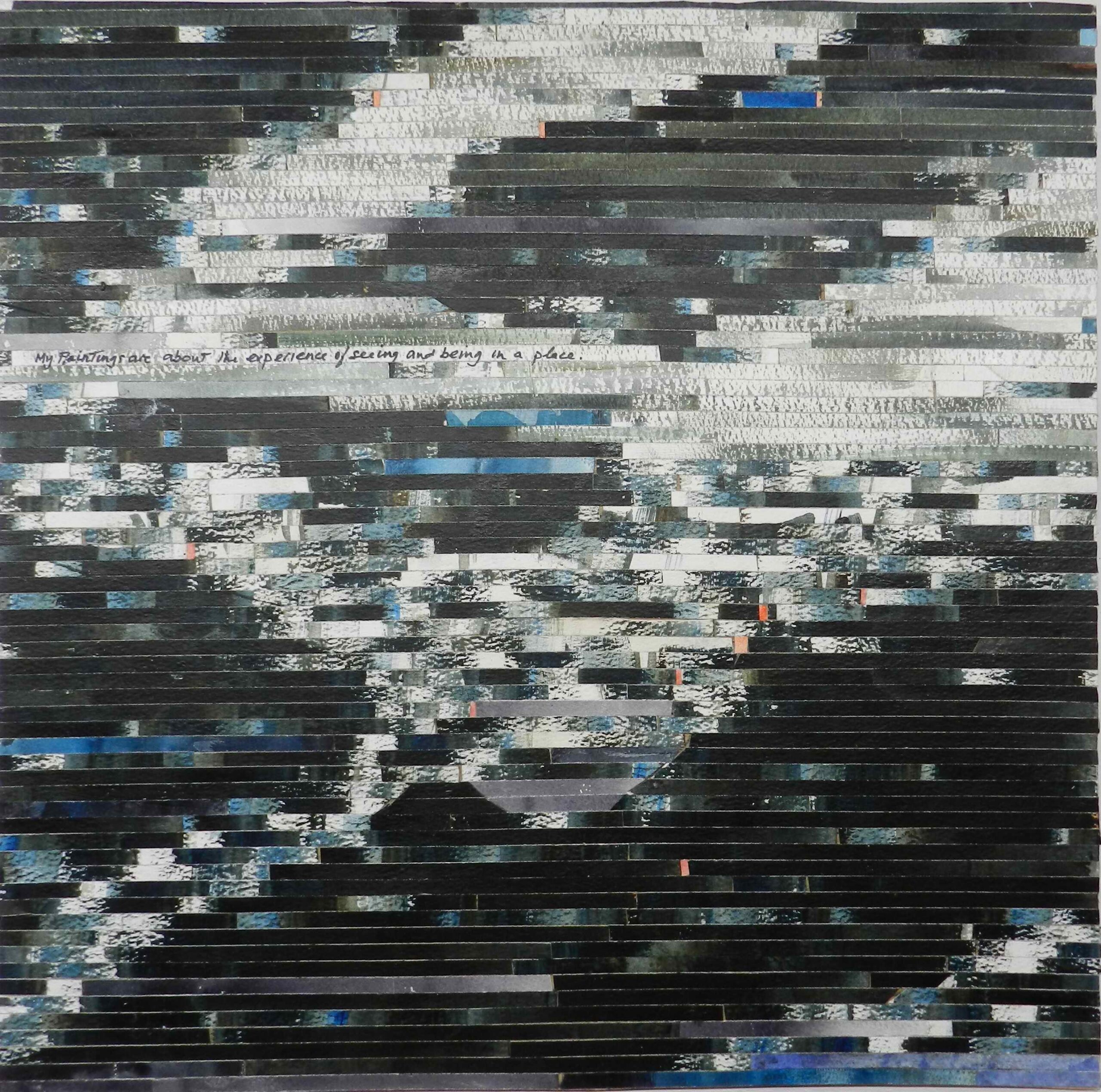
These paintings were exhibited in 2013 as part of a larger exhibition of my work, with the help of a professional curator.
Charlotte Williams ,who graduated with an MA in Curatorial Studies at Falmouth School of Art, agreed to curate this exhibition of my work. She chose Truro Arts venue in the Truro Museum, and organised the show in 2013, which was very well received especially by the local art community.
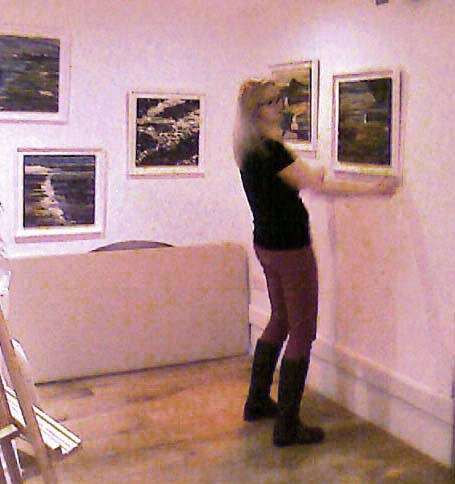
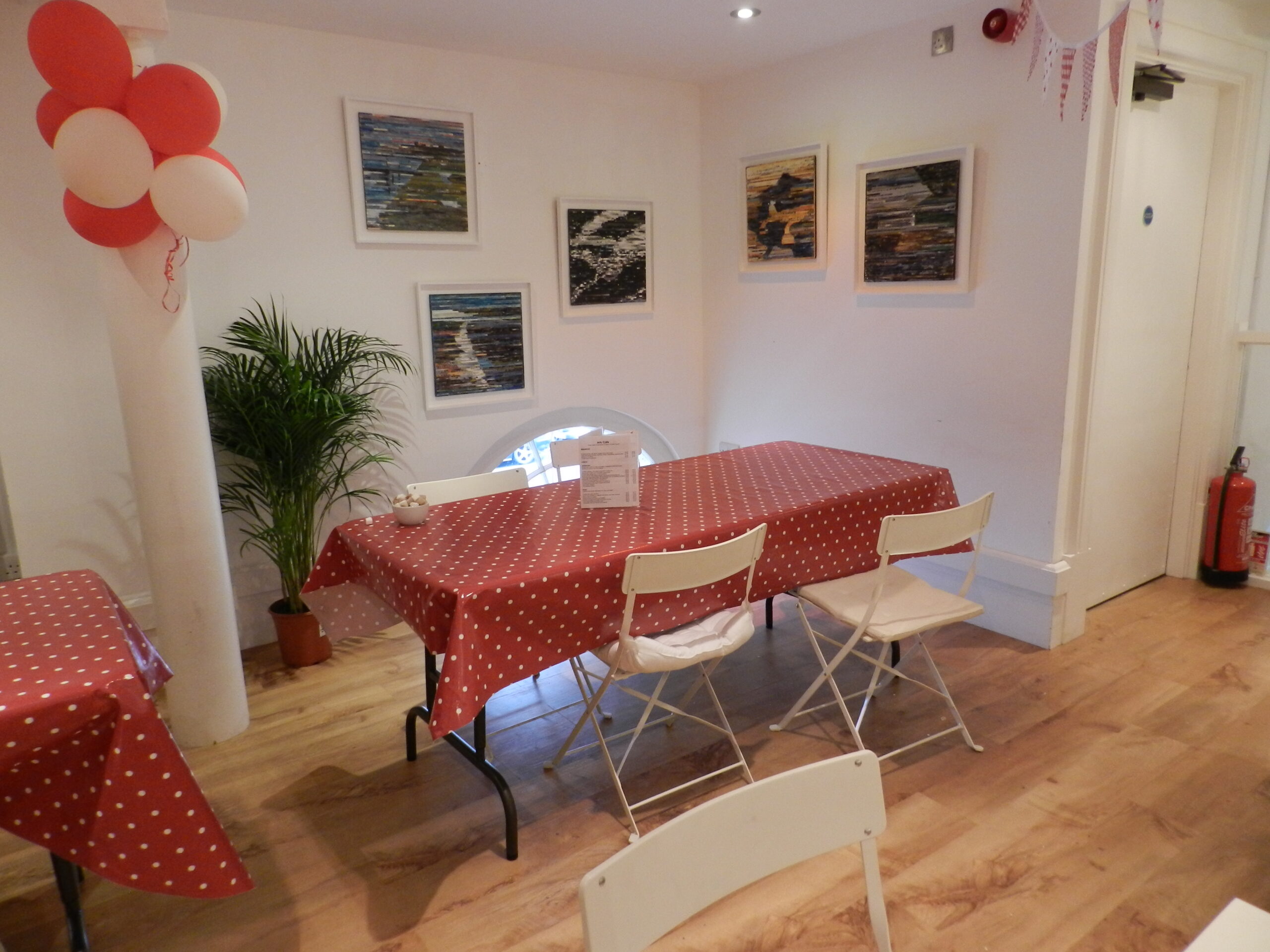
This body of work was subsequently exhibited at the Jam Factory Gallery in Oxford.